Counter-current for your pool: how to choose the right one
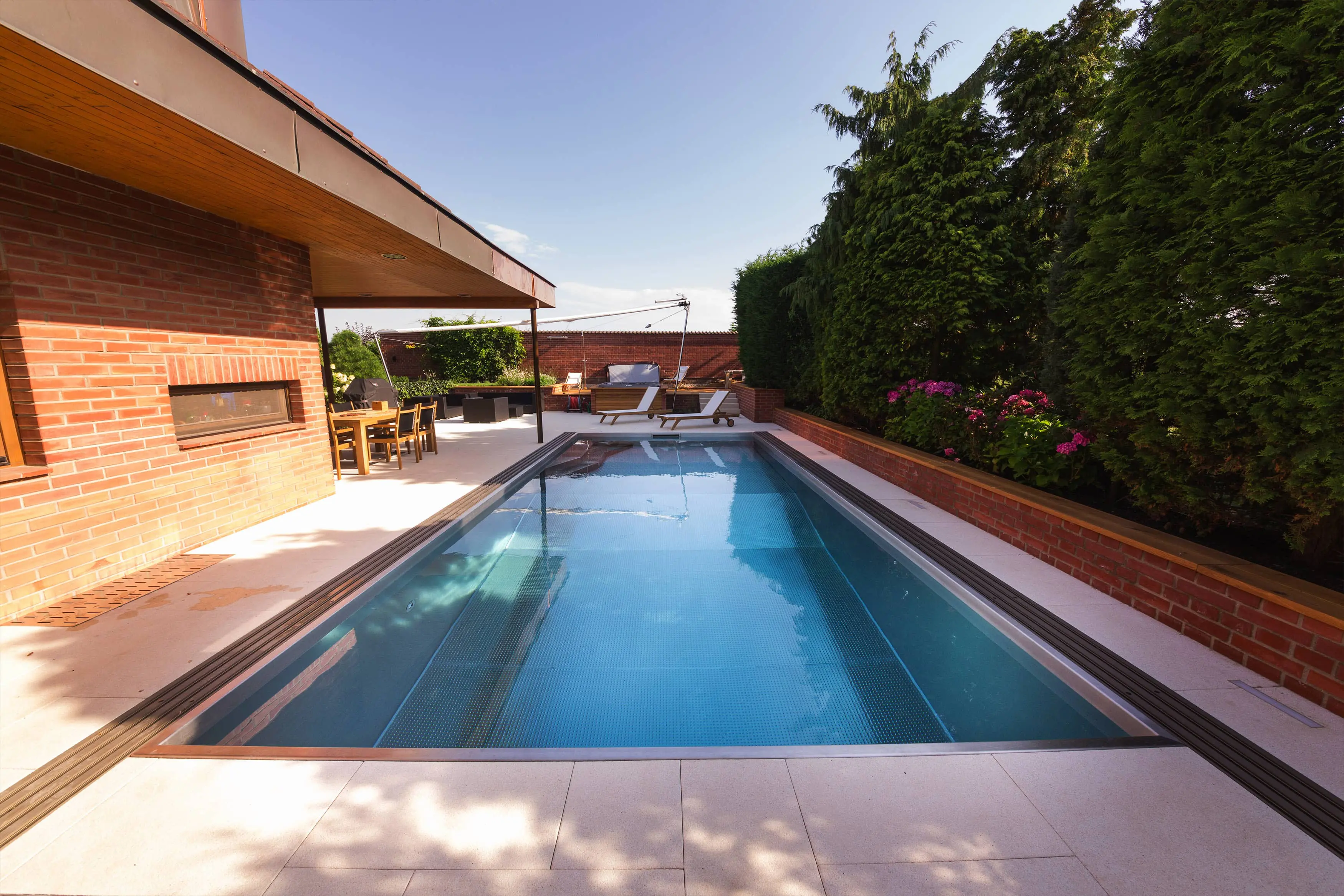
Small pool, great swimming experience. That’s exactly what a counter-current system promises – and for many pool owners, it’s a device that will change the way they use their pool altogether. But there are significant differences in performance, quality and price on the market. Here’s an overview to help you find your way.
How the counter-current system actually works
The principle is simple: the pump drives the nozzles, which inject a combination of water and air into the water and create a constant current. The swimmer swims in place – like in a river, but without moving anywhere. The intensity can be regulated, adapting the system to both the recreational swimmer and the competitive athlete.
A side effect is the massaging effect of the current and oxygen-rich bubbles – a pleasant bonus, especially after training or during rehabilitation swimming.
Why it makes sense to buy one
The counter-current solves the basic problem of many private pools: they are beautiful, but too short for real swimming. With a counter-current, length ceases to play a role. You swim against the current for as long as you want, without turning, without hitting the wall.
Specific benefits include fitness training in your own pool, the opportunity to work on your swimming technique, rehabilitation exercises in the water (aqua aerobics, yoga, walking) and relaxation through massage jets. For families with children, it also adds a whole new dimension of fun to the pool.
Built-in or suspended?
This is the first decision you have to make – and ideally before the pool is finished.
The built-in counter-current system is mounted directly into the pool wall, typically into the front wall opposite the skimmer. It is an aesthetically cleaner, more powerful and more durable solution. The disadvantage? You have to think about it during construction or expect a greater intervention in the finished pool.
The suspended counter-current system is installed on the edge of the pool – it works in both in-ground and above-ground pools. Commissioning is simple, as is relocation. The compromise lies in lower performance and a less elegant visual result. However, it is fully sufficient for recreational use.
Both types must be connected to electricity. When choosing, pay attention not only to performance, but also to consumption and noise – a loud counter-current can significantly reduce the comfort of swimming and relaxation.
Performance matters more than you think
For calm recreational swimming, a flow rate of around 50–70 m³/h is sufficient. If you really want to swim – to work on your fitness, to simulate a race pace – you need significantly more. And this is where the difference between an average and a high-quality counter-current is most evident.
Professional systems such as the Binder counter-current system operate on a turbine principle instead of a conventional pump. The result is a significantly stronger, more natural current – the feeling of swimming in a river, not just resisting a water whirlpool. At the same time, the turbine system takes up less space than conventional pump solutions, and installation does not require a shaft or complex wiring – one power cable is enough.

How to choose the power of a Binder counter-current system?
If you are considering a professional solution, base your choice on pace:
Single-turbine models are suitable for both recreational and performance swimmers. A flow rate of 160 m³/h corresponds to a pace of approximately 2:30 per 100 m, and a flow rate of 215 m³/h to 2:15 per 100 m. The more powerful variants with flow rates of 275 and 600 m³/h are designed for more demanding athletes.
The two-turbine models are for competitive swimmers, triathletes and commercial use – waves in water parks or a wild river. Flow rates from 320 to 1,200 m³/h correspond to a pace from 1:45 to sub-1:05 per 100 m.
The system is controlled via an app on your phone or smartwatch – you set the power, the training programme and the turbine lighting. Automatic shutdown when a problem is detected is standard.
How much it costs and what you get for it
The price range is very wide: basic suspended counter-currents start below CZK 20,000, while high-quality built-in systems range from CZK 30,000 upwards. Professional turbine counter-currents exceed 100,000 CZK – but they offer performance, reliability and an experience that cheaper models simply cannot replicate.
One thing always applies: a counter-current system is a long-term investment that should last at least ten years. Don’t buy the cheapest option just because it’s the cheapest – service availability and quality of workmanship are just as important as performance on paper.
The counter-current system can be installed in both a new and an already operating pool – you don’t have to wait for a renovation.
The counter-current system is part of a complete pool solution that IMAGINOX designs to measure. Whether you are building a new stainless-steel pool or looking for a way to supply energy to an existing pool, we will be happy to advise you on your choice. Find out more at www.imaginox.com — or contact us directly.
You may be interested
A sauna or a hot tub after a workout? Both work – but in different ways and at different times
A stainless steel rooftop swimming pool: why metal is the best material when every kilogram counts