Sensory showers for hotel wellness centres: a multi-sensory ritual that guests will never forget
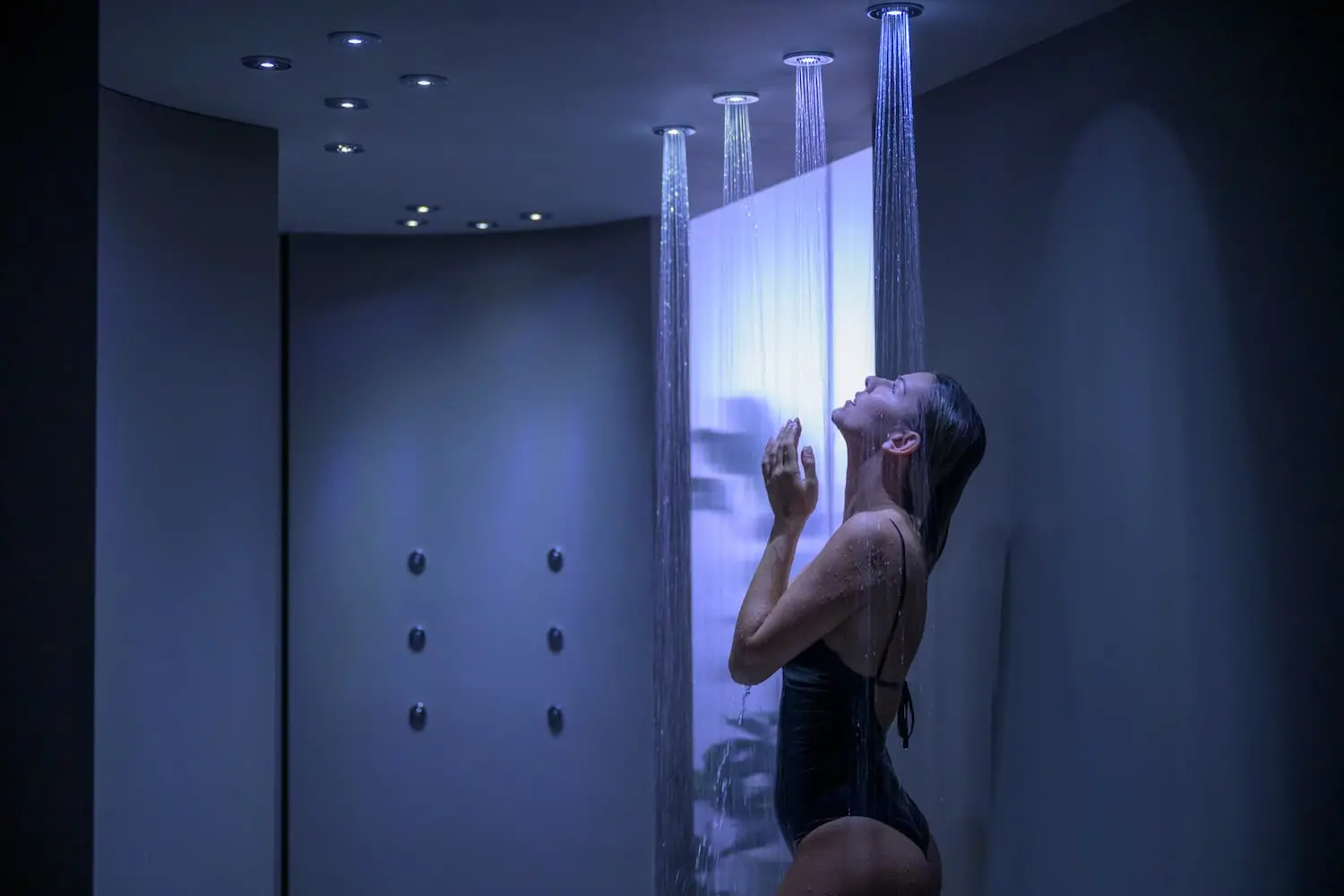
In the hotel industry’s competition for every review and every returning guest, large investments are easy to overlook — but small details stick in the memory. The experience shower is exactly such a detail: physically compact, simple to operate, but absolutely irreplaceable from the point of view of the guest’s experience. Guests will take a photo of the view from the room window once. They will remember the experience shower forever.
What an experience shower actually is
An experience shower is not a shower enclosure with additional jets. It is a multi-sensory wellness station that works simultaneously with water, light, scent, temperature and sound — in pre-programmed sequences that specifically affect the user’s physical and mental state.
The Italian brand Aquaform has developed a system in which each programme lasts 120 to 180 seconds and combines different intensities and types of water flow with chromotherapy, aromatherapy and sound effects. The user does not select individual functions — they select an intention: I want to recharge, I want to relax, I want to warm up or cool down. The shower then puts together the entire sequence automatically.
For hotel wellness facilities, this has a crucial practical consequence: minimal operation, maximum user accessibility. Without any instructions, the guest presses a single button — and receives a professionally designed relaxing or energising programme.
Water technology: from rain to waterfall
The water component of the experience shower works with a significantly wider range of intensities and types of flow than we are used to from a conventional shower.
Gentle rain — tiny droplets create a pleasant sensory experience without physical stress. This type of flow is used in the initial or final phase of the programme, when the body transitions from one state to another. Gentle rain reduces muscle tension in the face and shoulders and induces a state of mental relaxation.
Medium-intensity flow — a classic shower experience, but precisely calibrated to a specific temperature and flow rate. In the programmes, the temperature changes continuously — alternating warmer and cooler water stimulates blood circulation and creates a physiological effect comparable to contrast therapy in a sauna environment.
Strong pulsed jet — waterfall effect — intense mechanical massage of the muscles using a strong jet of water. This element is key to relieving tension in the back, shoulders and neck — i.e. precisely where guests most often feel pain after a full day’s programme or sporting activity. The pulsating waterfall activates circulation in the deep muscle layers in a way that is comparable to manual massage.
Side jets and hydrotherapeutic massages — modern massage jets located in the side walls of the cubicle target specific parts of the body. The adjustable angle and pressure allow the jet to be redirected exactly where the tension is greatest. The hydrotherapeutic component of the experience shower thus goes beyond mere washing and enters the realm of physiotherapy.
Alternating temperatures — one of the most effective tools in the entire system. The transition from warm water (40–42 °C) to cold water (15–18 °C) and back stimulates the autonomic nervous system, enhances blood circulation and releases endorphins. This effect — well documented in the context of Nordic sauna culture — is replicated automatically in Aquaform experience shower programmes without the need for manual intervention by the guest.
Chromotherapy: light as a therapeutic tool
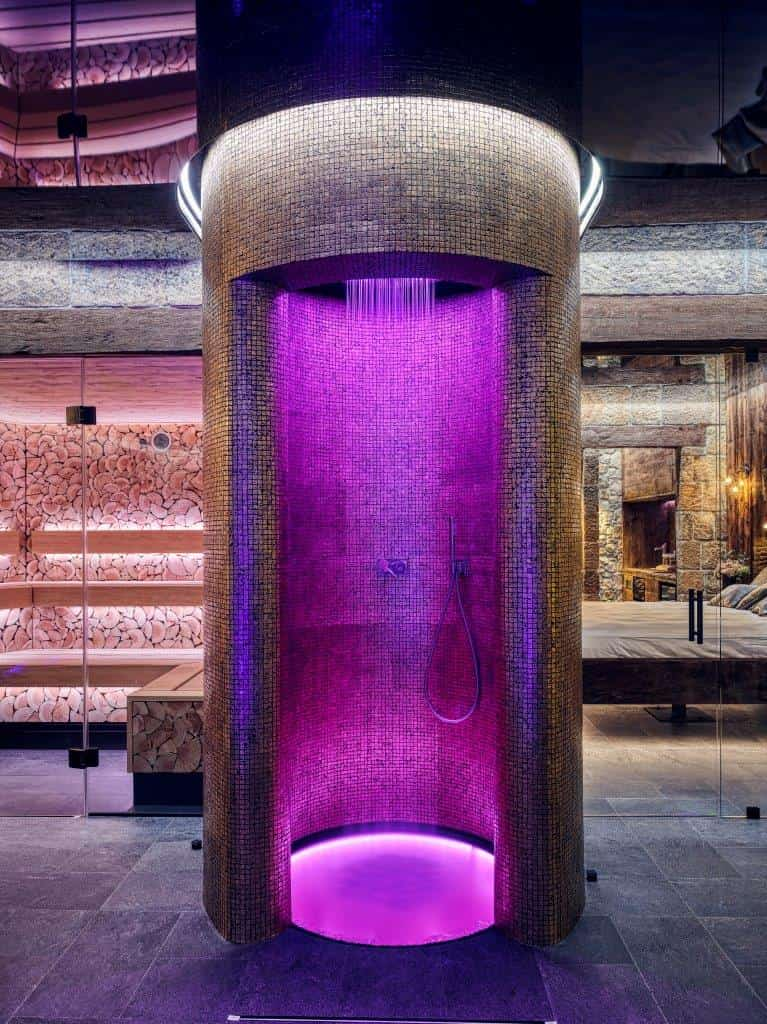
Chromotherapy — colour light therapy — is one of the oldest complementary treatment methods and also one of the most widely accepted in the hotel wellness context. Guests perceive it immediately, without the need for explanation, and the effects are subjectively powerful.
Experience showers work with a full spectrum of colours, with each colour assigned to a specific physiological and psychological purpose:
Red and warm shades are part of energising programmes. Red light stimulates the nervous system, increases the heart rate and induces a state of activation — ideal for morning showers or for guests who need to recharge their batteries before a sporting activity.
Blue and cool spectra work in the opposite way: they slow down the nervous system, lower the heart rate and induce a state of relaxation. Blue light is the most effective tool in the shower for reducing stress and is a key component of evening relaxation programmes.
Yellow is the colour of mental activity, concentration and a positive mood. In programmes, it is used in transition phases — between activation and relaxation — and promotes a feeling of well-being and self-confidence.
Purple works with balance — both physical and mental. It is popular in programmes focused on overall harmonisation and is a natural choice for guests going through a stressful or overwhelming period.
Green is the colour of concentration, renewal and harmony. Green light has proven effects in reducing eye strain and is part of programmes aimed at regeneration after intensive mental work.
In practice, guests do not need any theory of chromotherapy — they simply need to enter the cabin, select a programme and let the light sequence do its work. The resulting experience speaks for itself.

Aromatherapy: smell as the most powerful emotional gateway
Of the five senses, smell is the one that most directly activates emotions and memory. The olfactory sensation goes directly to the limbic system — the part of the brain that processes emotions and stores memories — without the filter of rational thought. Aromatherapy in the experience shower deliberately makes use of this neuroanatomy.
Citrus scents (orange, lemon, grapefruit) are significantly energising — they increase alertness, reduce subjective fatigue and induce a feeling of freshness. They are indispensable in morning or energising programmes.
Mint has a dual effect: the menthol component physically cools the mucous membranes and respiratory tract (a strong effect when inhaling steam in a warm shower cubicle) while also mentally stimulating and sharpening perception.
Lavender is the most widely used relaxing fragrance in a wellness context — it reduces cortisol, slows down breathing and induces a state in which the transition to sleep or deep relaxation occurs naturally and without difficulty.
Eucalyptus and pine needles — scents of the natural environment with a pronounced respiratory effect. They clear the airways, reduce tension in the chest and act as a natural aromatherapy for guests with allergies or respiratory problems.
The fragrances in Aquaform showers are automatically activated in time with the programme and mix with the water vapour — the olfactory sensation is therefore more intense and lasts longer than it would with a conventional diffuser.
Aquaform’s product portfolio for hotel wellness
Aquaform offers hotels a complete portfolio of experiential elements that can be combined into comprehensive wellness sequences:
Horizontal and vertical experience showers — basic formats for individual use. Horizontal showers are suitable for smaller wellness areas or for integration into changing areas, while vertical showers are suitable for wellness cabins and treatment rooms.
Kneipp path — one of the most effective yet simplest wellness elements. Alternating hot and cold pebble or water zones while walking stimulates the reflex points of the feet and activates blood circulation throughout the body. The Kneipp path is an excellent transitional element between the sauna and the relaxation zone and serves as a natural conclusion to the sauna cycle without the need to immerse oneself in a cooling pool.
Emotional tunnel — a premium feature for large hotel wellness centres or spa resorts. The tunnel combines water mist, chromotherapy, aromas and sound effects into an immersive sequence that the guest passes through physically — not just stands in one place. Moving through the tunnel intensifies the sensory experience and creates a transition between the individual zones of the wellness centre. Guests rate this element as one of the most powerful experiences of their entire stay.
Reference project: Al Nin Hotel & Spa, Livigno (Italy)
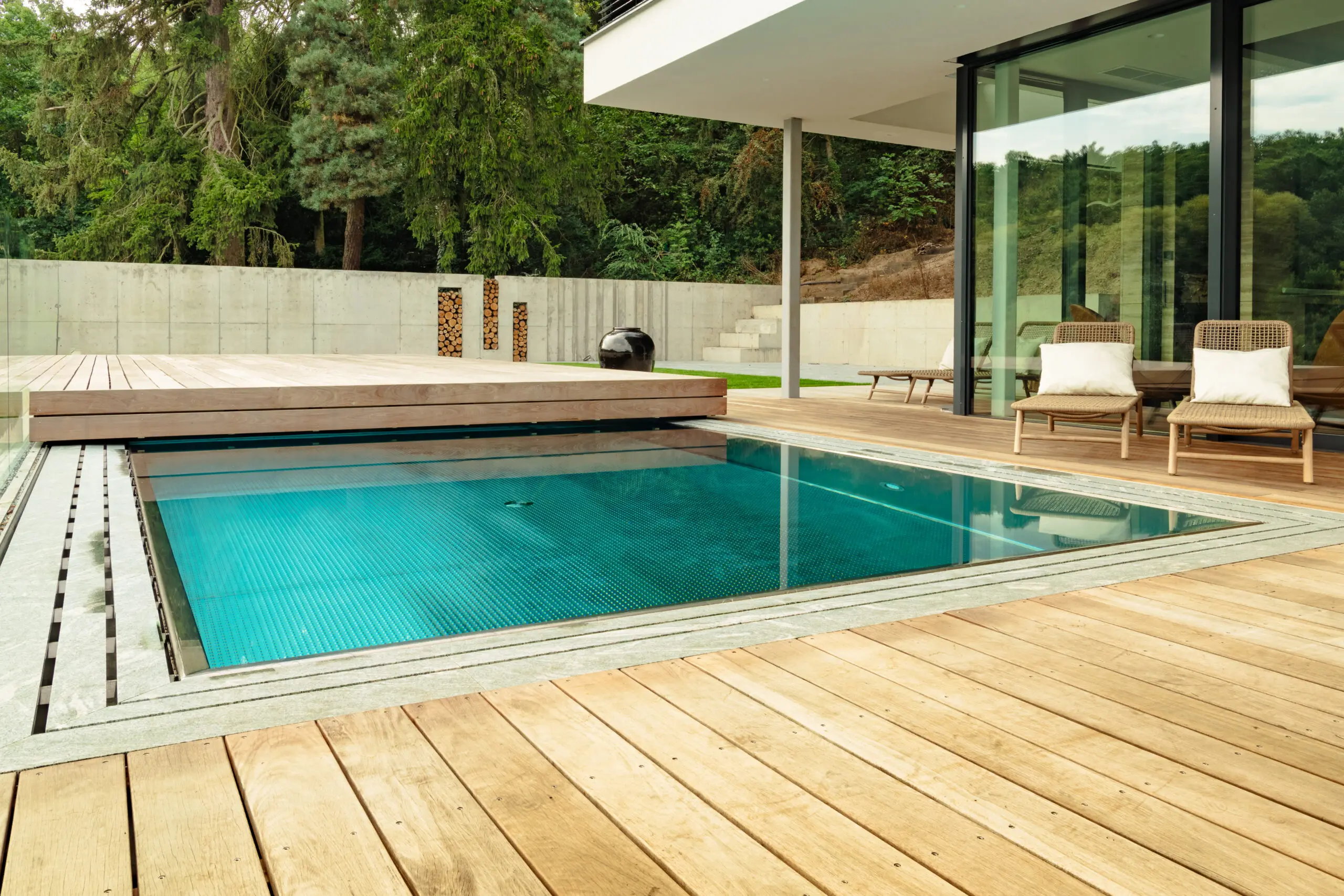
We installed Aquaform experience showers as part of a turnkey hotel wellness facility for Al Nin Hotel & Spa in Livigno, Italy — an Alpine resort with a discerning international clientele. The wellness centre was designed as a comprehensive solution including a stainless steel pool, hot tubs, saunas and experience showers as a natural part of the flow of guests between the individual zones.
The showers are located at the transition between the sauna zone and the relaxation area and serve as a multifunctional element: as a cooling-off point after the sauna, as a morning activation ritual and as a separate wellness procedure for guests who are not interested in the full sauna programme. The result confirmed what experience has shown time and again: guests actively seek out experience showers, comment on them in reviews and return to the same hotel because of them.


Why an experience shower belongs in every hotel wellness centre
The experience shower is one of the most scalable wellness elements — a single cubicle is sufficient for a small boutique hotel, while for a large resort, several can be linked together to form a comprehensive wellness sequence. The acquisition costs are significantly lower than for a swimming pool or sauna, operation is practically undemanding and no staff are needed.
At the same time, from the guest’s point of view, experience showers are among the most memorable aspects of their stay — precisely because they engage multiple senses at once and create an experience that cannot be enjoyed at home. This is exactly the category that every hotel wellness centre should invest in: features that are unavailable to guests outside the hotel and that will bring them back.
For more information about Aquaform experience showers and their integration into a hotel wellness project, visit www.imaginox.com
You may be interested
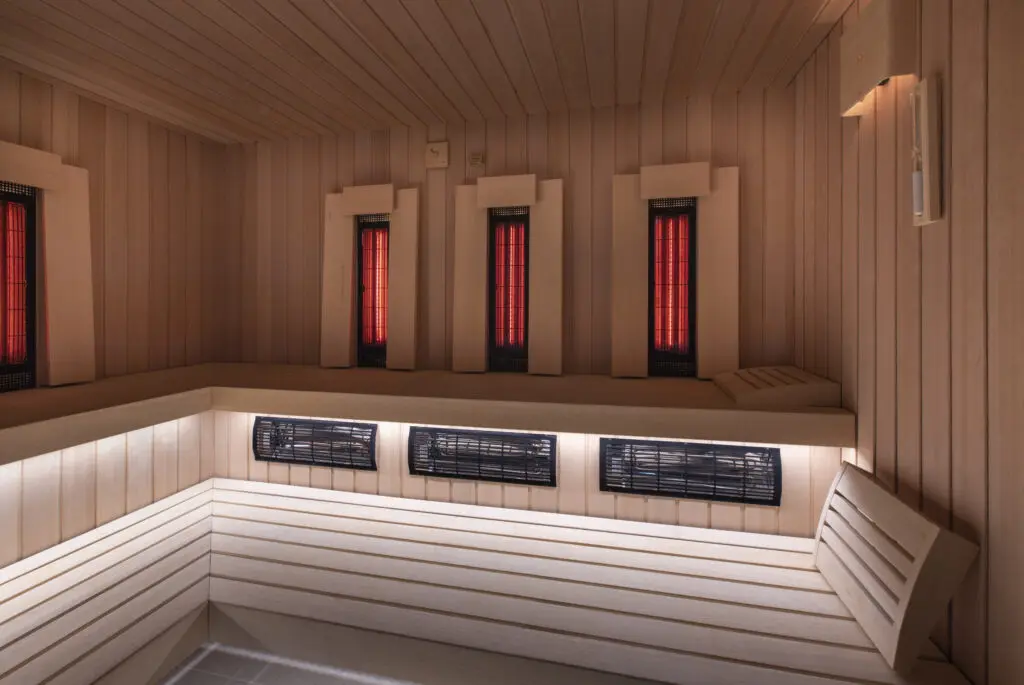
Infrared saunas in an architectural context: why architects and hotels are incorporating them into premium projects
Concrete swimming pools in 2026: the comeback of a material that never really went away