Concrete swimming pools in 2026: the comeback of a material that never really went away
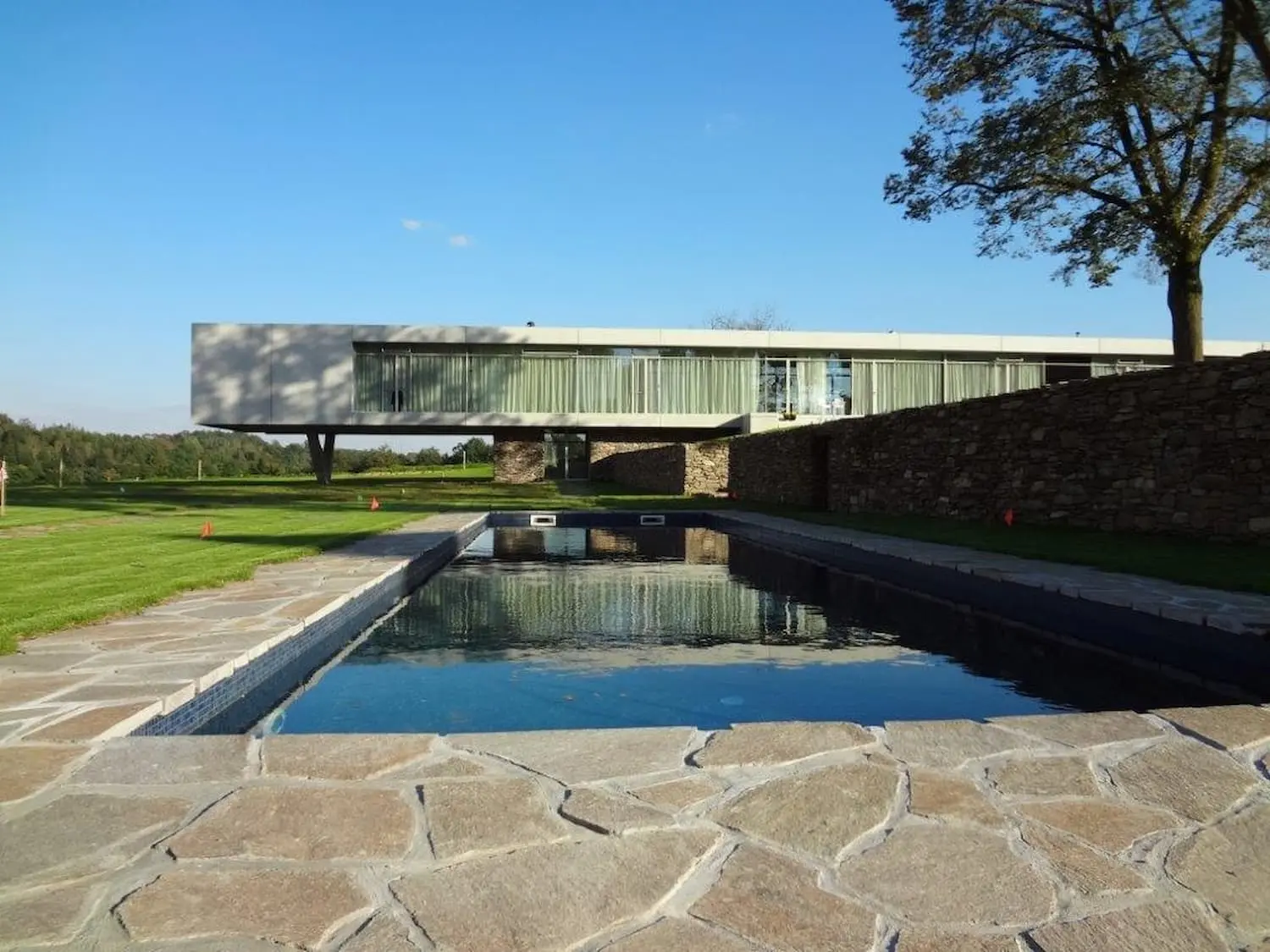
The concrete pool is back – and this time in a different role. Ceramic mosaic in the public pool style of the 1980s really is a thing of the past. But concrete as a material for pool construction remains one of the most sought-after choices for architects, developers and discerning private investors. Why? Because concrete is the only material that allows absolute freedom of shape – and modern surface finishes, especially 3D liners, make it a product that visually competes with the stainless steel pools of premium hotels.
Why architects have not abandoned the concrete pool
A concrete pool offers something that neither a fibreglass nor a standard stainless steel pool can: the pool is built on site, exactly according to the design documentation, without compromising on dimensions, proportions or shapes. Organic curves, asymmetrical floor plans, a pool with an island, with sunken seating or with several different levels of depth in a single structure – all of this is feasible and natural with concrete. For the architect, concrete is a “blank canvas” on which there is no need to apologise for standard formats.
The second advantage is that a concrete pool is built directly on site – without the need to transport a prefabricated element by crane, without the restrictions imposed by the clearance dimensions of the gate or access road. Concrete is irreplaceable for buildings in historic centres, in densely built-up areas or on atypically accessible sites.

3D liner: the surface revolution that changed the game
Until ten years ago, a liner pool was associated with a plastic, generic look. Today, things are different. The generation of 3D liners currently available for concrete pools has taken the aesthetics of liner surfaces to a level where they are practically indistinguishable from natural stone, textile surfaces or artistic reliefs for the uninitiated layperson.
How do 3D liners work? The basis is a watertight membrane – PVC or reinforced composite liner – which is applied to the concrete substrate and forms the primary waterproofing of the pool. Manufacturers integrate three-dimensional embossed patterns into this base – a relief that is perceptible not only visually but also haptically. The result is a surface that feels different to the touch than smooth plastic and looks different from any “standard” pool.
Alkorplan Touche Elegance is one of the most advanced products in this category. The liner combines a visual imitation of natural stone with a three-dimensional relief and an antibacterial acrylic layer on the surface, which performs three functions at once: it protects the liner from UV radiation (crucial for outdoor pools), slows down microbial growth and prevents algae from penetrating the surface. This layer significantly extends the service life of the liner and reduces the demands on chemical management – lower chemical consumption, more stable water parameters.
What surfaces do 3D liners imitate? The current range includes options that imitate finely worked sandstone, dark slate stone, polished marble or coarsely textured natural solid wood. Each surface reacts differently to light – and it is precisely this interaction with light that distinguishes 3D liner from flat printed liner. A pool with 3D liner changes throughout the day – it looks different in the morning, different in the afternoon, and different again in the evening under artificial lighting.
Pool colours in 2026: out with turquoise, in with earthy tones
The colour trend in swimming pools has shifted significantly in recent years. The classic turquoise colour, which dominated for decades as the default choice, is giving way to more sophisticated shades that resonate better with contemporary architecture.
Dark ocean blue – liners in deep indigo or midnight blue create an effect of depth and mystery in the pool. The water in a pool lined in this way resembles the open sea – dark, matte, with a reflection of the sky. This effect is particularly strong in larger infinity-edge pools, where the water visually merges with the horizon.
Slate grey and anthracite – neutral, architecturally strong colours that integrate seamlessly into modern minimalist architecture. An anthracite pool looks like a precise design object, not like a “garden refreshment”.
Emerald and dune green-grey – colours inspired by natural bodies of water: lake green-grey, the sea horizon on a windless morning. These shades are popular in landscaped gardens, where the pool is intended to form a natural extension of the vegetation.
Sand beige – the most spa-like of all current trends. A beige-toned pool evokes a natural spring or a tropical coastline with white sand. Warm, natural, luxurious.
The common denominator of these trends is a shift away from artificially looking water towards water that looks natural – as if it simply belongs there.
Infinity edge in a concrete pool: the purest architectural solution
The infinity edge is one of the most sought-after features in premium pools today. And a concrete pool is an excellent platform for this detail, because the infinity edge can be designed with exactly the geometry that matches the architecture of the surrounding space.
Unlike a stainless steel pool, where the infinity edge is part of a prefabricated structure, a concrete pool allows the infinity edge to be designed as a bespoke architectural detail: with precise inclination, with an integrated gutter hidden below the level of the terrace, with tiling that matches the surrounding paving or natural stone. The result is an infinity edge that visually “disappears” – and the water surface truly merges with the horizon without any visible technical element.
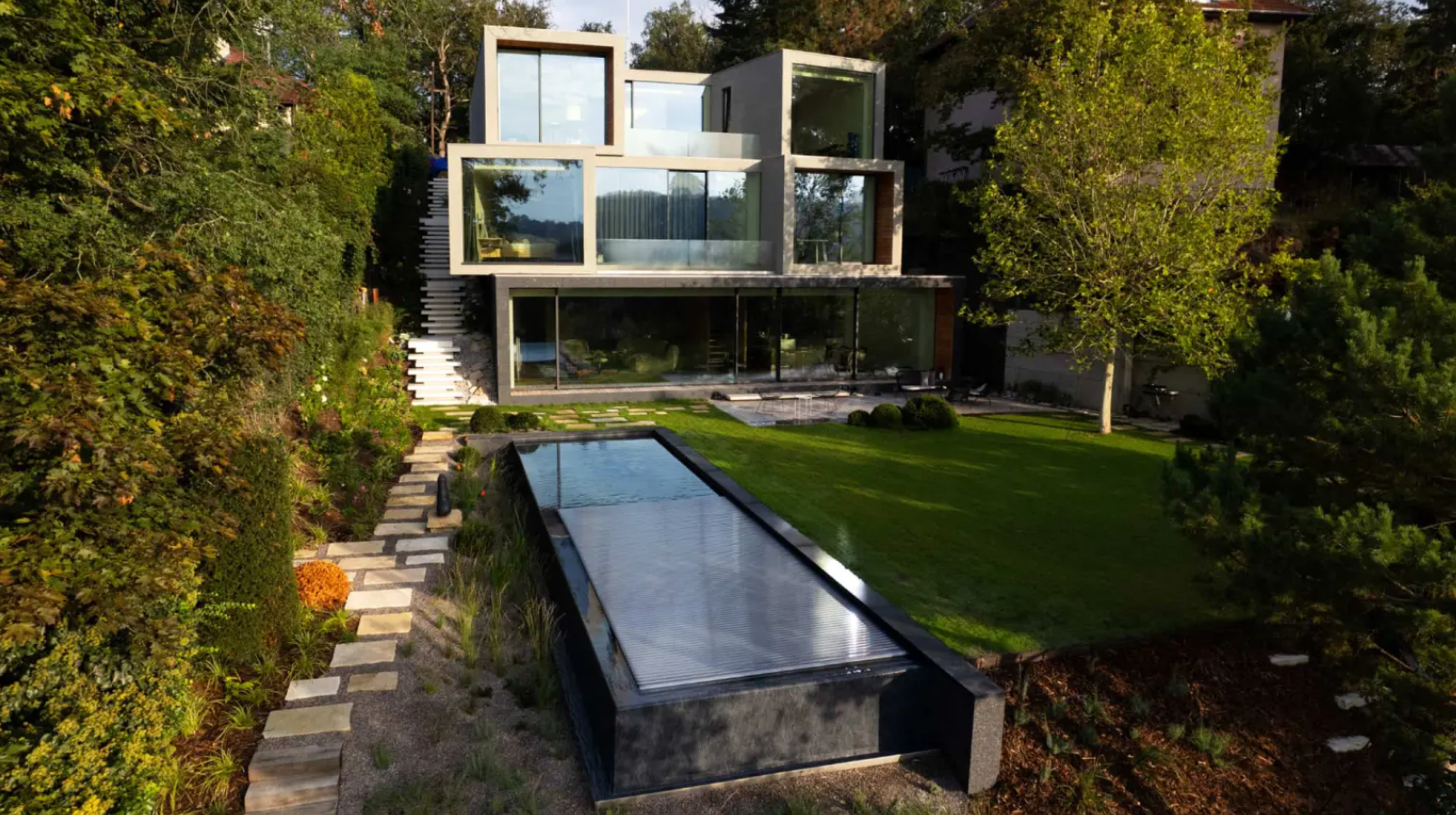
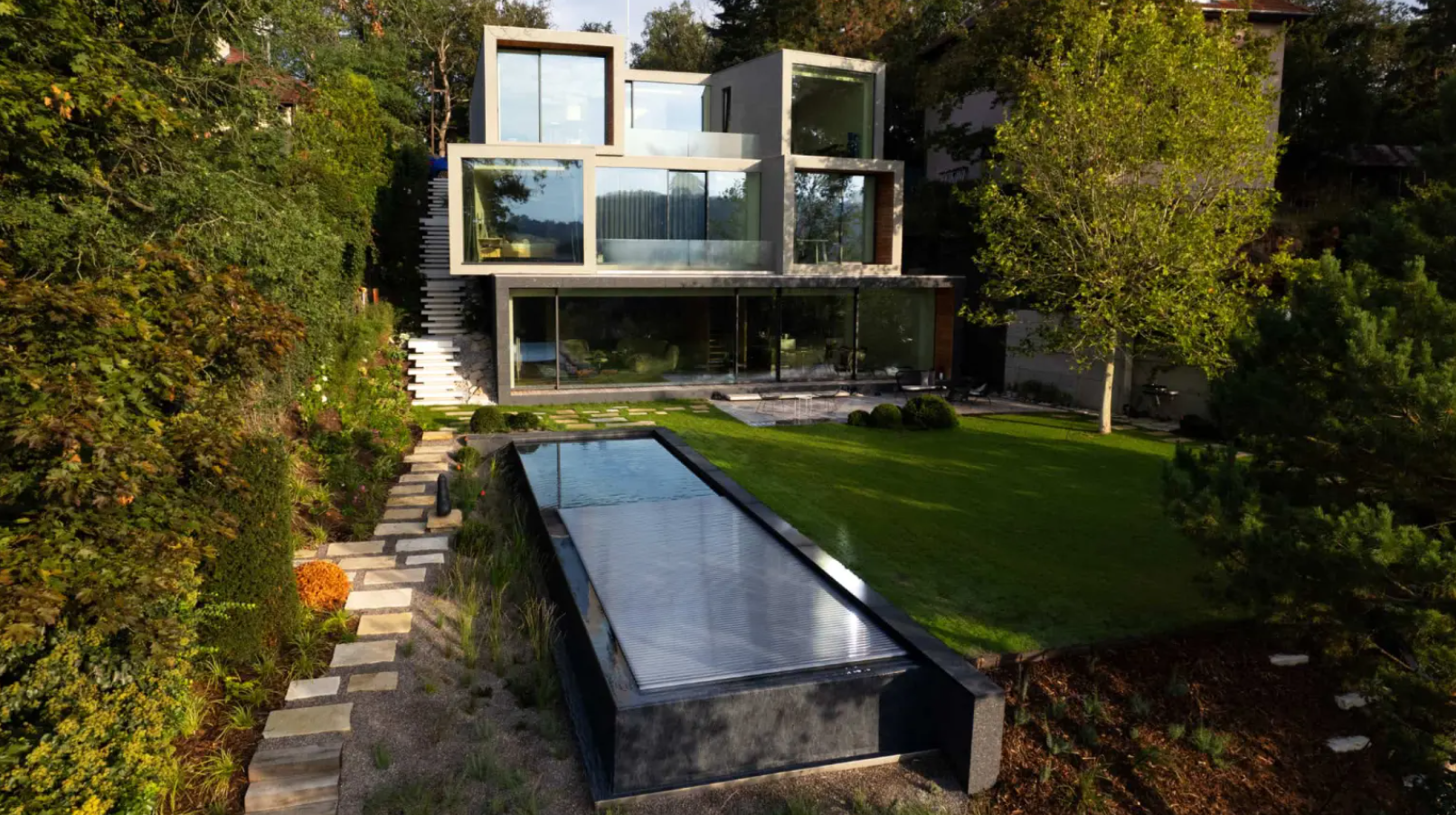
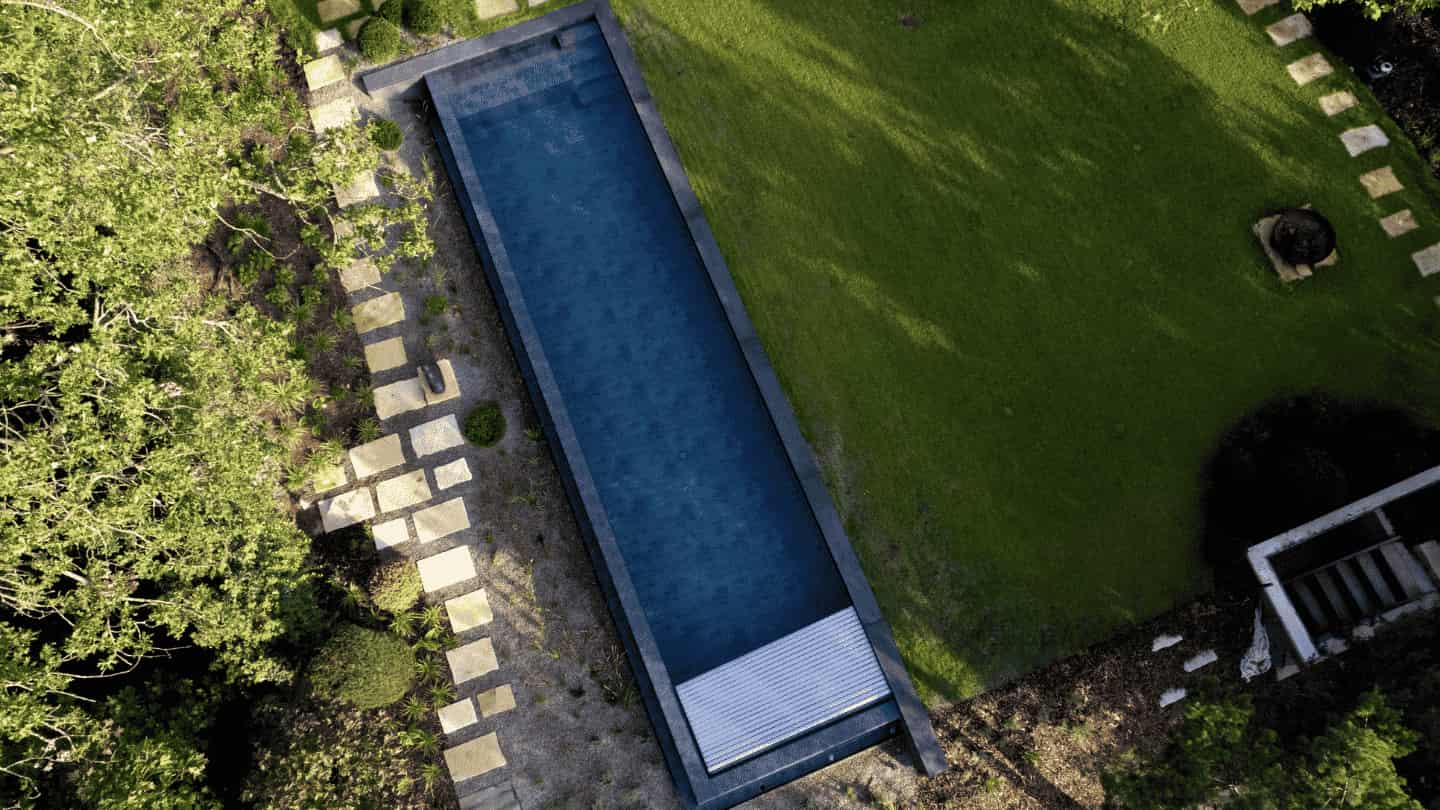
Example from practice: project for Šesták Architekti. The overflow concrete pool with Alkorplan Touche Elegance liner was designed with an infinity edge on two sides, facing an open view of the landscape. The chosen shade of the liner imitates natural stone and elegantly complements the material concept of the entire house. Even after a year of use, the pool looks like new – the antibacterial acrylic layer has fulfilled its purpose and the liner shows no visible signs of ageing. The pool is also compatible with a slatted cover – functionality without compromising on design.
This project shows that a liner concrete pool in premium architecture is not a compromise. It is a fully-fledged architectural solution.
What you need to know about building a concrete pool
A concrete pool requires more preparation and a longer construction time than prefabricated alternatives – this is a fact that needs to be taken into account when planning a project.
Construction takes place directly on site: excavation, formwork, reinforcement, concrete pouring, curing, surface finish. The whole process typically takes 4 to 8 weeks, depending on the complexity of the project. For hotels or residential projects in operation, this means the need to plan construction outside the high season or to coordinate construction with other works.
The advantage over other materials is the maximum durability of the structure itself: a properly constructed reinforced concrete pool will last for decades without intervention. The liner is replaced after several years – but replacing the liner is a straightforward process that also allows you to change the colour or texture of the pool. In this sense, a concrete pool is “upgradable” – it changes over time and with the owner’s taste.
For architects, it is crucial to start consulting with the pool manufacturer as early as possible during the project. The technical requirements for the overflow channel, the volume of the storage tank, the location of the plant room and the routing of the pipes must be integrated into the project from the outset – not dealt with as additional complications.
Are you planning a project with a concrete pool and looking for a manufacturer with experience in premium architectural projects? Take a look at our reference projects and contact us for a no-obligation consultation at www.imaginox.com
You may be interested

IMAGINOX is introducing a new brand identity. New look, same values.
Sensory showers for hotel wellness centres: a multi-sensory ritual that guests will never forget