Infinity pools for private villas vs. hotels: design, operation, ROI and social media
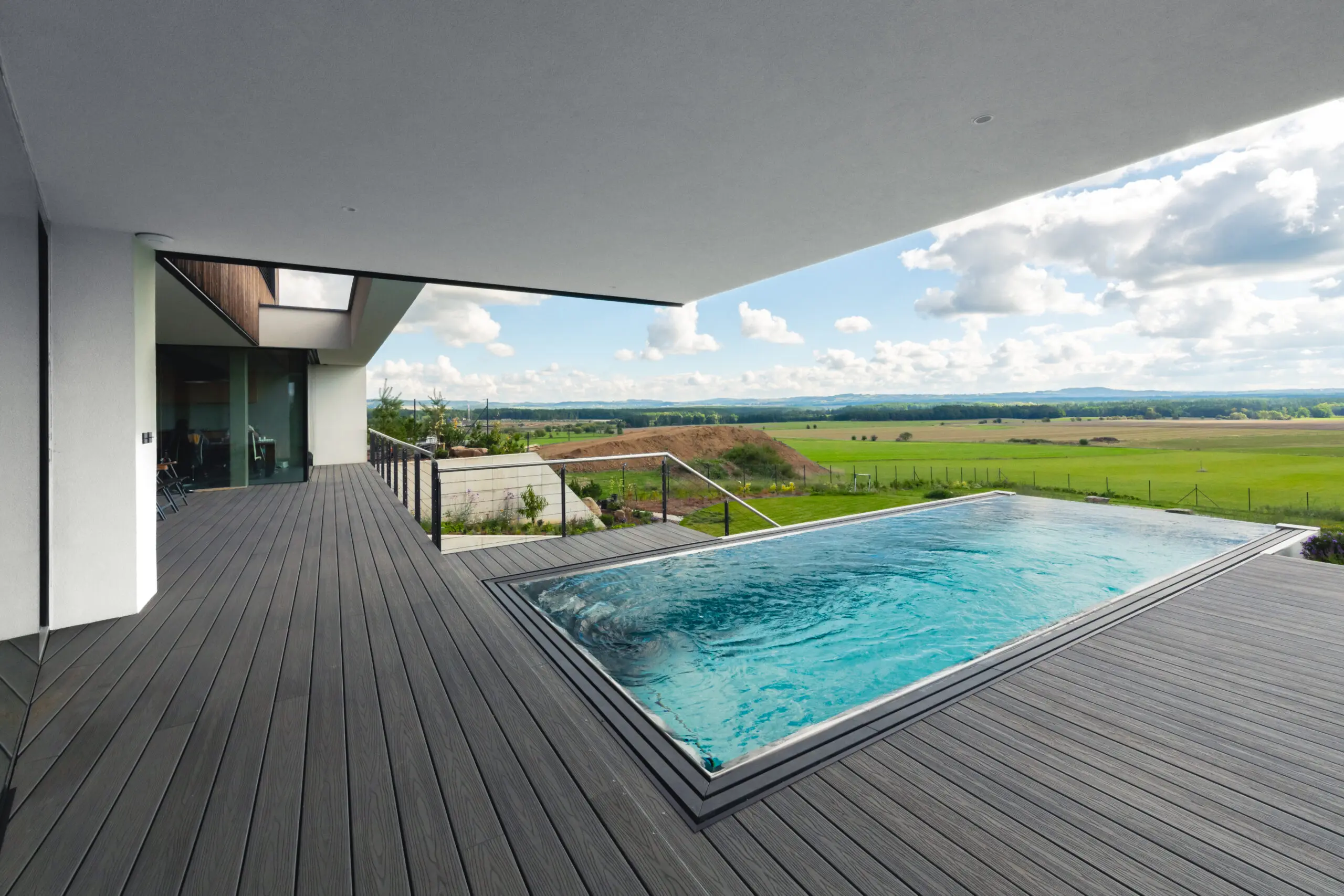
Today, the infinity pool is one of the most powerful visual shortcuts to luxury. The water level merging with the horizon, a precisely crafted stainless-steel overflow edge, the reflection of the sky on a calm water surface – these are images that are shared, saved and become a reason to book. Nevertheless, an infinity pool in a private setting and in a hotel setting are fundamentally different: in design, capacity, operation, return on investment and in the most common mistakes that arise during its implementation. This article explores all these differences and shows why proper preparation is key to making an infinity pool truly work – aesthetically, technically and economically.
Infinity pool for a private villa: intimacy, design and lifestyle
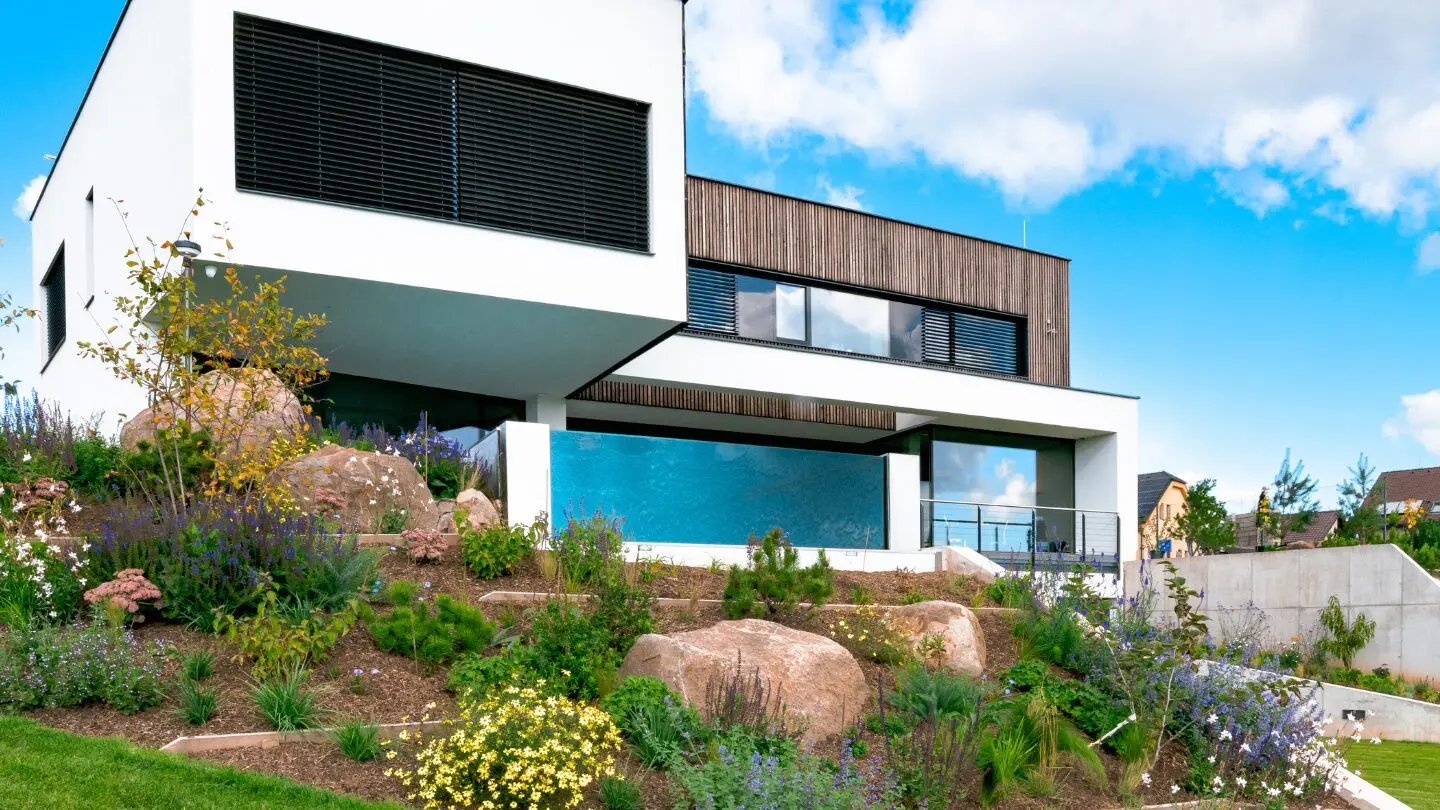
In a private setting, an infinity pool is primarily an architectural statement. It is not created for capacity or revenue – it is created as the dominant element of a terrace, garden or roof area, defining the character of the entire house. The typical dimensions of a private infinity pool range from 5 × 2.5 m for more compact terraces to 15 × 4 m for large villas with panoramic views. The depth is usually 1.3–1.5 m, and the overflow edge is always oriented towards the best view.
The choice of material is a direct reflection of the investment plan. Stainless steel for private pools is a premium choice: a non-porous surface without bacterial deposits, a service life of 50+ years without replacing the liner or repainting, and complete resistance to frost and UV radiation. The design of the overflow edge can be purely flush-edge, discreetly hidden under the surrounding terrace, or raised above floor level as a solitary element. Each of these variants places different demands on the statics of the subsoil and the connection of the collection channel.
A private infinity pool is also simpler to operate than a hotel pool: the volume of water is smaller, the frequency of use is lower, and the hygiene requirements are less stringent. A skimmer system is sufficient for most private installations if the overflow edge forms only one side of the pool. An overflow channel is required whenever there is an overflow edge on two or more sides, or if the project requires an infinity effect from all angles.

Infinity pool for a hotel: capacity, operation and standards
A hotel infinity pool is a different category – technically, operationally and in terms of regulations. The basic difference lies in the number of users: a hotel pool must handle dozens of people a day, all year round, with minimal downtime. This places significantly higher demands on filtration, disinfection, water circulation and hygiene standards. In Germany and Austria, DIN 19643 applies, which requires drinking-water quality in the pool and precisely defines the circulation volume, chemical dosing and the frequency of parameter measurement.
Technically, this means: the overflow channel must accommodate the entire volume of overflow water even when the pool is filled to capacity with guests, the buffer tank must have a capacity of 25–35% of the pool volume, the pumps must be frequency-controlled (energy savings of up to 60% compared to uncontrolled systems), and UV disinfection combined with automatic chemical dosing is standard for every commercial installation. The technical room for a hotel infinity pool with a length of 10–15 m requires a minimum area of 15–25 m².
The hotel infinity pool must also meet the DIN 51097 anti-slip standards (class B for barefoot zones, class C for the pool area) and accessibility standards for people with reduced mobility. This regulatory reality is one of the reasons why stainless steel is almost the only sensible choice for hotel pools: the non-porous surface meets the hygiene requirements systemically, without depending on the quality of the foil or coating.
Difference in design: what works in a villa, what works in a hotel
A villa and a hotel have different design priorities. In a private project, the focus is on the owner’s view from the interior or from the terrace – the pool must be perfect from a single key angle. The hotel infinity pool must work visually from multiple angles at the same time: from the restaurant, from the hotel lobby, from the rooms, from the terrace and from a photograph taken by a guest. This affects the orientation of the overflow edge, the position of the pool on the premises and the choice of lighting solution.
The design of the overflow edge also differs. A private project can afford a more subtle solution – for example, a narrow stainless-steel overflow profile embedded in a natural stone terrace. A hotel project requires a more robust solution that can withstand intensive use, is easy to clean and maintains precise horizontality even after years of operation. Stainless steel is again the clear choice here: unlike concrete, it does not expand or settle, and the overflow edge remains perfectly level throughout the life of the pool.
Lighting is another key difference. A private infinity pool can work with discreet, minimalist lighting – one or two underwater spotlights are enough to create an evening atmosphere. A hotel pool requires a full-fledged lighting scenario: an RGB LED system with automatic scenes according to the time of day, complemented by lighting of the overflow channel and the surrounding terrace. This lighting effect is also one of the most powerful visual elements for photography and social media.

The most common mistakes when designing an infinity pool
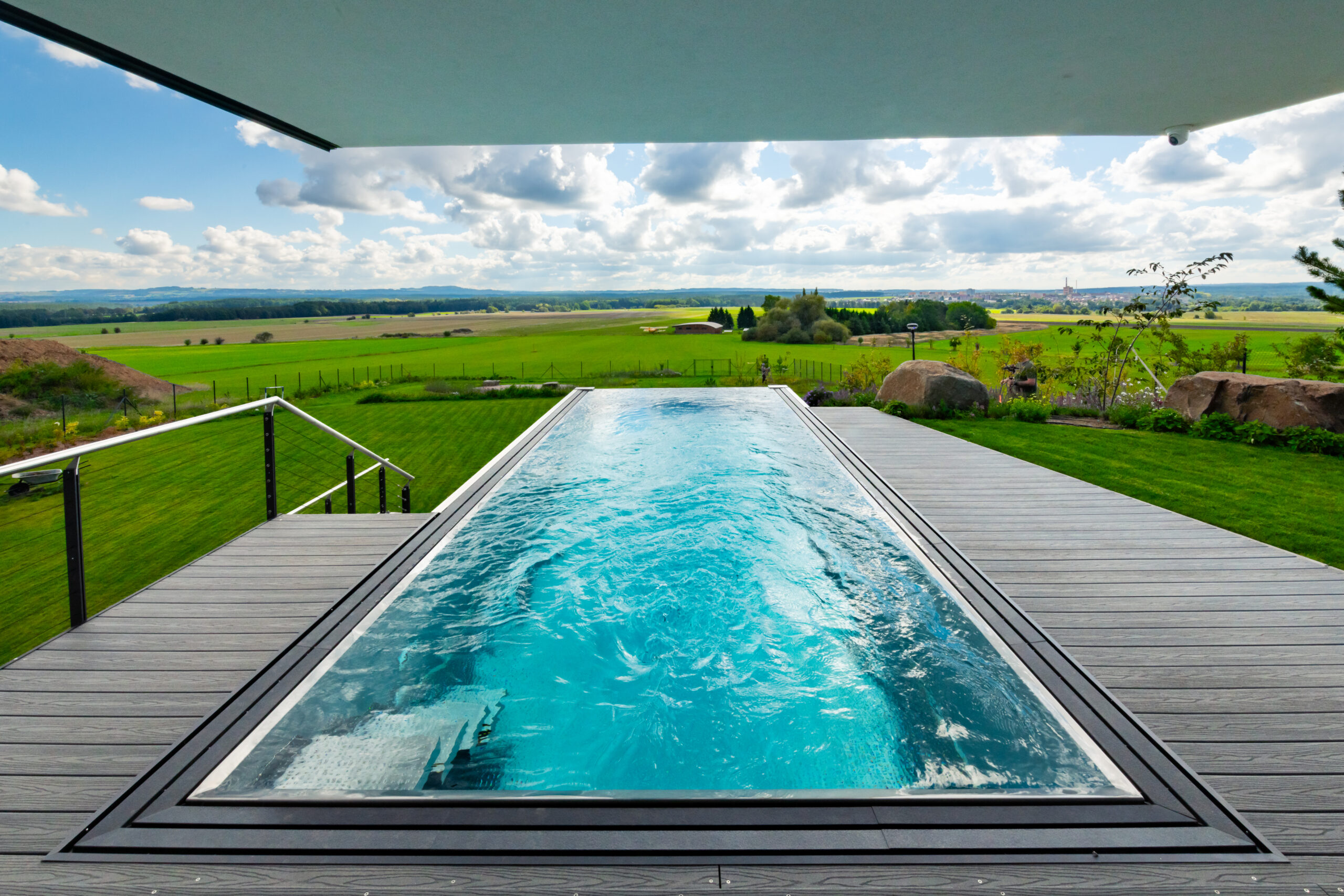
Poor orientation is the most common and most expensive mistake in the entire design process. The infinity pool must be oriented towards the best available view – mountains, sea, garden, city skyline. The overflow edge must be exactly on the side where the view begins. This principle sounds trivial, but in practice it is violated surprisingly often: the architect places the pool according to the layout of the house or hotel, not according to the azimuth of the view, and the result is a pool that blends in with an uninteresting space. At such an advanced stage of the project, it is not possible to rectify this without major structural modifications.
Underestimated structural engineering is the second systemic error. An infinity pool – especially one with an overflow edge on the free edge of a terrace or roof – creates an extraordinary static load. Water weighs approximately 1,000 kg/m³, and a full pool measuring 10 × 3 × 1.5 m creates a load of over 45 tonnes. Added to this is the weight of the stainless-steel structure itself, the dynamic load from users and, where applicable, the wind acting on the water surface. The structural assessment must be prepared for the specific conditions of the site and the type of subsoil – and must be commissioned to an expert with experience in hydraulic structures.
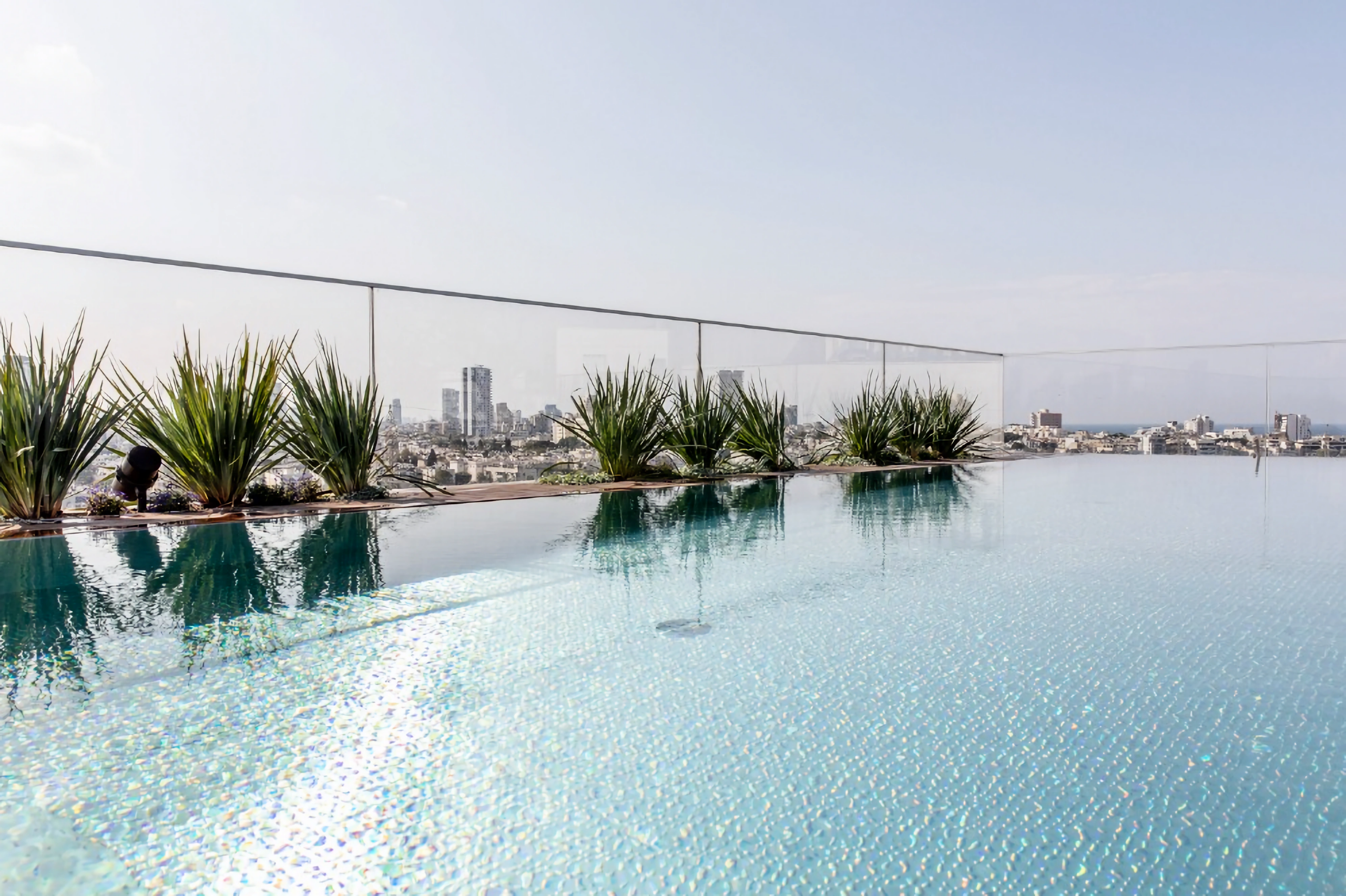
A poor or disappearing view is the third critical error. The view of the open landscape may be blocked in ten years by new buildings, mature trees or the construction of a neighbouring building. Before placing an infinity pool, it is therefore necessary to assess the view corridors not only in their current state, but also with regard to regulatory plans and the possible future development of the surrounding area. In a hotel environment, the height of the pool’s location also plays a role: a pool on the roof or on a higher floor provides a view without the risk of shading.
Other common mistakes are: underestimated volume of the buffer tank (causing overfilling or lack of water during intensive use), poorly dimensioned pumps (if too weak, they do not maintain a smooth overflow; if too strong, they cause turbulence on the surface), lack of access for servicing the filtration and pumps, and lack of thermal insulation of the pool structure (without insulation, the energy costs for heating water in outdoor operation are disproportionately high).
Infinity pool ROI: how the investment pays off
For a hotel project, the return on investment in an infinity pool is measurable and documentable. An analysis of more than 11,000 hotels by the Global Wellness Institute shows that properties with high-quality wellness and pool facilities achieve, on average, 108% higher total revenue per room than hotels without these facilities. The infinity pool is one of the most visually striking features – no other part of the wellness area is photographed, shared and mentioned in reviews by guests as often. The return on investment in a high-quality stainless steel infinity pool in hotel operations ranges between 18 and 36 months, depending on the size of the project and the hotel occupancy rate.
For a private villa, the ROI is less straightforward, but no less real. A property with an infinity pool achieves a significantly higher price when sold or rented than a comparable property without a pool – in premium locations, this difference is 15-35%. In the case of short-term rentals, an infinity pool is one of the most effective arguments for a higher price per night and higher occupancy. In addition, stainless steel minimises ongoing costs: no liner replacement, no repainting, minimal surface maintenance for 50 years or more.
Why an infinity pool works on social media
The infinity pool is probably the most photographed architectural element in the entire hotel and residential scene. The reason is simple: it meets all the conditions for viral visual content. It is aesthetically perfect – clean lines, a mirror surface, the contrast of water and sky. It is emotionally powerful – evoking freedom, luxury, tranquillity and exclusivity at the same time. It’s easy to photograph – even with a smartphone without special equipment, you can create images that look professional. And it’s communicative – a photo from an infinity pool immediately communicates: I was here, this is how I lived.
The data confirms this intuition: tourism surveys repeatedly show that 61% of travellers choose a hotel after seeing it on social media – and photos from an infinity pool are consistently among the most shared hotel content on Instagram, Pinterest and TikTok. Hotels like Bergwelt Grindelwald in Switzerland – where IMAGINOX created an infinity pool (10.2 × 3.5 m) overlooking the Eigernordwand – achieve thousands of organic shares per month without a single paid advertising campaign. Every photo shared by a guest is an advertisement with a credibility that no paid campaign can match.
The precision of the design is crucial: a blurred overflow edge, visible joints or an uneven water overflow will destroy the aesthetic effect in the photo and in real life. Stainless steel from IMAGINOX guarantees millimetre precision of the overflow edge throughout the life of the pool – no sagging, no deformation, no surface degradation. A pool that looks perfect on the first day looks just as perfect after ten years of operation. And that is precisely the prerequisite for lasting success on social media: consistent visual perfection, not a one-off effect.

Infinity pool from IMAGINOX: tailor-made for every project
IMAGINOX designs and manufactures stainless steel infinity pools for hotels, resorts and private villas throughout Europe. Each project begins with an individual consultation – what is the view, what is the structural design, what is the goal of the investment. The result is a pool that is not a catalogue product, but an architectural work precisely designed for a specific location. From a compact private pool on a roof terrace to a large-format hotel infinity pool with a panorama: IMAGINOX delivers with precision and durability that does not diminish over time.
You can find out more about IMAGINOX infinity pools and projects at www.imaginox.com
You may be interested
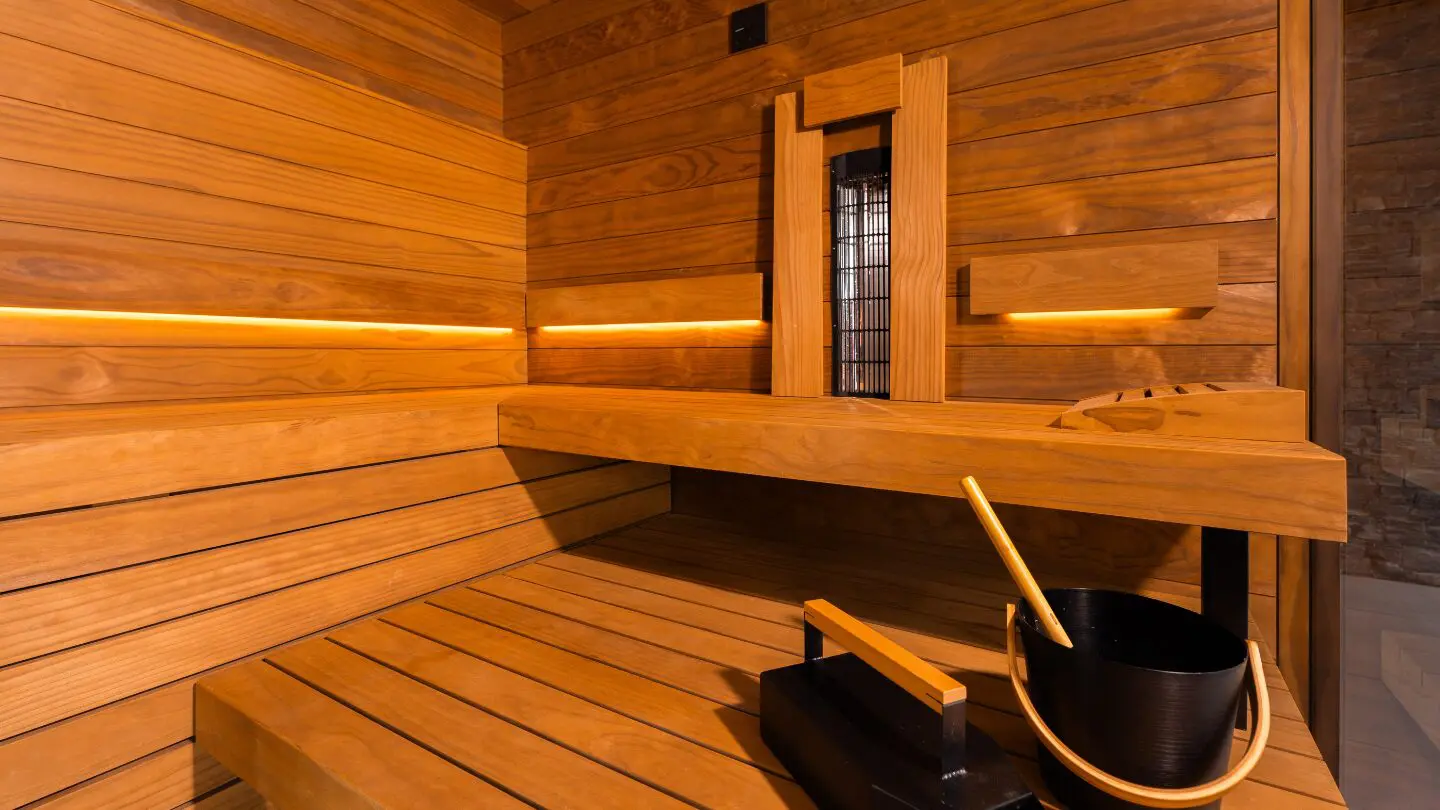
A sauna or a hot tub after a workout? Both work – but in different ways and at different times
A stainless steel rooftop swimming pool: why metal is the best material when every kilogram counts