How Michelin keys change the hotel world
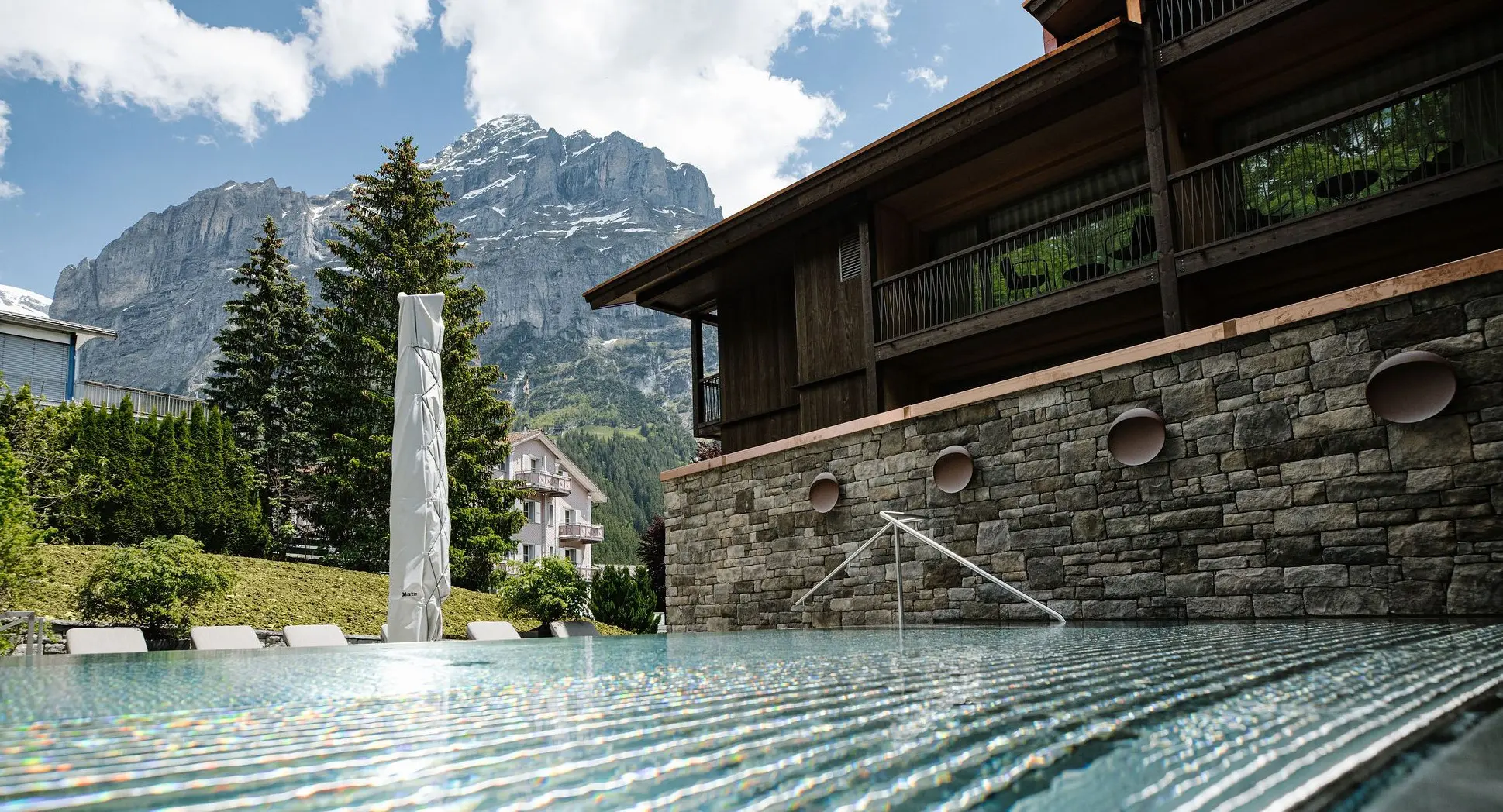
Since 2024, the prestigious Michelin Guide has been evaluating the world’s best hotels with a new ‘key’ system — and one of the first to be awarded is an Alpine resort featuring pools by the Czech company Imaginox. In October 2025, the Swiss Bergwelt Grindelwald, a four-star design hotel overlooking the famous peaks of the Eiger, the Mönch and the Jungfrau, received a Michelin key. The heart of its wellness facilities is the Fire & Ice Spa, which features a stainless steel pool and an outdoor hot tub designed and manufactured by IMAGINOX. This demonstrates that the quality of wellness facilities directly impacts a hotel’s ability to achieve the most prestigious industry award.
What are Michelin stars, and why were they created?
Most people are familiar with Michelin stars as the highest award for restaurants. However, as of April 2024, Michelin Keys have been introduced as their hotel equivalent. While Michelin stars rate the cuisine, Michelin Keys rate the overall experience of the stay. A hotel can receive one, two or three keys, with three keys representing a ‘special stay’ — an unforgettable experience for guests.
The project took four years to develop. The first keys were awarded on 8 April 2024 in France, where 189 hotels received them. This was followed by the United States (124 hotels), Spain and Italy (146 hotels), Japan, and nine other countries. A major turning point came on 8 October 2025, when Michelin presented the first global selection of 2,457 hotels in around 125 countries worldwide at the Musée des Arts Décoratifs in Paris. Of these, 143 received three keys, 572 received two and 1,742 received one. These hotels were selected from over 7,000 properties recommended by the Michelin Guide.
What distinguishes the key to the star is that architecture, interior design and atmosphere are the main criteria for evaluating hotels — for restaurants, however, the décor is not a factor. This is where wellness comes into play.
The five criteria that determine the key:
Michelin evaluates hotels according to five universal criteria. Each award-winning hotel must excel in all five, not just one.
These are:
– Excellent architecture and interior design: how a hotel translates the aesthetics of its surroundings into the sensory language of space.
– Quality and consistency of service: system excellence from booking to check-out.
– Personality and character: an authentic identity that guests feel in every detail.
– Value for money: it’s not about the low price, but whether the hotel exceeds expectations.
– Benefits for the neighbourhood and location: how the hotel connects guests with the local culture and environment.
Unlike the Forbes Travel Guide system, which uses over 900 micro-criteria, Michelin emphasises a holistic experience and ‘genius loci’ — the evaluators assess the continuity of the entire stay. Gwendal Poullennec, International Director of the Michelin Guide, summed it up: ‘Just as a Michelin star honours restaurants at the pinnacle of their art, the Michelin Key honours the world’s most spectacular hotels.’
The evaluation is carried out by anonymous inspectors — former catering and hotel industry professionals, employed and paid directly by Michelin. They do not use social media, and they visit hotels repeatedly and pay for their stays themselves. This independence distinguishes the Michelin Keys from most other rankings, which are created either by readers’ votes or through paid partnerships.
Only 143 hotels worldwide have been awarded three keys
Let’s take a look at some specific examples. Among the 143 three-key hotels, there are some legendary names: The Four Seasons George V in Paris, Le Bristol Paris and La Réserve Paris, for example. In the USA, these include the Aman New York, the Hotel Bel-Air in Los Angeles, and the Amangiri in Utah’s canyons. Italy’s top hotels include Passalacqua on the shores of Lake Como and the Four Seasons Firenze. In Switzerland, Badrutt’s Palace Hotel in St. Moritz and Atlantis The Royal in Dubai both hold three keys.
Interestingly, the keys are not exclusive to palaces: Canada’s Clayoquot Wilderness Lodge is the only glamping location in the world with three keys, and Croatia’s Villa Nai 3.3 has just eight rooms. Michelin thus recognises excellence regardless of size or category.
Bergwelt Grindelwald: Alpine design with a Czech heart
Located in the heart of Grindelwald, Switzerland, beneath the imposing north face of the Eiger, the Bergwelt Grindelwald has been an Alpine Design Resort since 2021. This four-star superior hotel has 90 rooms and suites, and is a member of the prestigious Small Luxury Hotels of the World network. It is also available to book via the Hilton platform. In October 2025, it received one Michelin key, becoming one of only 87 Swiss hotels in the inaugural selection for the DACH region.
The Michelin Guide describes the hotel as follows: ‘Right in the middle of the action, the Bergwelt Resort enjoys breathtaking views of the iconic Alpine peaks and offers a charming après-ski scene in a range of beautifully equipped bars, lounges, spa areas, and terraces.’ In addition to the Michelin key, the hotel was named Hotel of the Year 2025/26 in the ranking of the 150 best Swiss hotels, and won the DACH Spa Award in the four-star hotel category.
The hotel’s wellness area, the Fire & Ice Spa, spans eight hundred square metres and is inspired by the contrasting heat and ice of the Grindelwald glaciers. The backbone of this area is formed by two water features from IMAGINOX:
The 10.2 x 3.5 metre Séracs stainless steel overflow pool dominates the interior of the spa. It features a generous staircase with stainless steel railings, a tubular bench, a massage wall, and an RGB LED lighting system which warms up the entire space and emphasises the ‘Fire & Ice’ concept. The dim lighting, combined with the deep blue hue of the water, creates an atmosphere of privacy and comfort.
The Ogiven outdoor hot tub, made of stainless steel, has dimensions of 5.23 x 3.92 metres. It is located on a terrace surrounded by high walls that ensure privacy while framing a panoramic view of the Alpine peaks. The wide tubular bench with massage jets allows you to relax even in winter, when the bright blue water surface reflects the power of the surrounding glaciers and alpine nature.
This is complemented by four saunas (Finnish, hay, sanarium and textile steam bath), a salt wall, an ice fountain, a relaxation room with a fireplace, and a private garden terrace. The hotel also offers a special Fire & Ice Night Spa Deluxe experience, which includes private evening access and champagne.
Guest reviews on Booking.com confirm the hotel’s quality: it has a score of 9.0 out of 10 based on 2,443 reviews, with location and comfort scores of 9.4 and 9.3 respectively. It holds the Travelers’ Choice award on TripAdvisor.

Why are prestigious awards important for wellness?
The year 2025 brought a crucial signal: Michelin introduced a special wellness award (the Michelin Wellness Award), the first winner of which was the Swiss Bürgenstock Resort with its ten-thousand-metre Alpine Spa. This formal confirmation by Michelin that wellness is a key differentiator of hotel excellence rather than just an accessory is significant.
Data from the sector clearly illustrates this trend. According to industry statistics, 80% of hotel guests choose a hotel based on whether it offers wellness facilities. Wellness tourists spend an average of 130% more than regular travellers. Furthermore, hotels with certified spas have seen a 15% increase in bookings and a 20% increase in spa revenue.
While wellness is not a separate criterion in the Michelin key rating, it is intertwined with all five pillars. Well-designed pools and spas contribute to the architecture and design. A unique concept, such as Fire & Ice, defines the individuality of the hotel. Professional wellness operations ensure consistent service. The connection of the spa with the surrounding landscape fulfils the criterion of contributing to the location — the panoramic Alpine view from the Imaginox outdoor hot tub at the Bergwelt is a perfect example of this.
The Forbes Travel Guide goes even further, evaluating spas as a separate category with its own five-star rating system. Its LQA (Leading Quality Assurance) standards include 53 dedicated wellness, spa and fitness criteria. It is clear that, without exceptional wellness facilities, a hotel will not reach the top today.
Stainless steel: the basis for long-term excellence
The choice of material for a hotel pool is not just a technical issue; it is also a strategic decision affecting operating costs, aesthetics, and the ability to maintain the standards required for prestigious certifications.
For a hotel aiming for a Michelin key, this provides a significant advantage: consistent visual and functional quality during every unannounced inspection, year after year. Additionally, the stainless steel surface meets the strictest hygiene standards and aligns with sustainability trends — Bergwelt Grindelwald holds the highest Swiss standards for sustainable tourism, namely the Swisstainable Level 3 ‘Leading’ certification and ibex fairstay gold.
Today, IMAGINOX supplies swimming pools and wellness equipment to over ten countries and has completed more than a thousand projects. References include the Bergwelt Grindelwald as well as alpine hotels in Livigno, Italy (Al Nin Hotel & Spa, Damelis Hotel), mountain resorts in Romania and luxury projects in the Czech Republic. The group comprises four specialised companies — IMAGINOX Pools (pools), TAO (saunas), Aquafloors (movable floors) and Aquamarine Spa (design) — enabling it to deliver complete wellness solutions from design to installation.
The key to the future of luxury hotels
The Bergwelt Grindelwald’s story shows how the definition of hotel luxury is evolving. It’s no longer just about marble lobbies and star ratings. Michelin Keys value authentic experiences, thoughtful design, and internal consistency — and wellness is precisely where these qualities converge most powerfully.
When a guest enters the Séracs’ overflow pool and looks through the steam curtain at the snow-capped Alpine peaks. It is the material — its glare, smoothness and quiet reliability — that contributes to the overall experience and determines whether a guest will return. It is also what determines whether an anonymous Michelin inspector will write the word ‘exceptional’ in his rating.
With 2,457 award-winning hotels and ambitions to expand worldwide, the Michelin Keys are just beginning. Hotels that invest in quality wellness today are building on foundations that will open the door to tomorrow’s awards. The Czech stainless steel pools at an Alpine resort with a Michelin key prove that the path to the world’s top can also lead from the Czech Republic.
You may be interested
A sauna or a hot tub after a workout? Both work – but in different ways and at different times
A stainless steel rooftop swimming pool: why metal is the best material when every kilogram counts